RESOURCES
FOR OKA FIGURE SKATING ATHLETES
Here you'll find some really helpful links, documents and answers to common questions about everything from skate care to competition requirements, to testing.

U.S. Figure skating TESTING
U.S. Figure Skating (USFS) testing is a nationally recognized system that helps skaters progress through the sport. Each test level includes specific skills — like footwork patterns, jumps, spins, or choreography — and is judged by certified officials.
When a skater passes a test, they officially move to the next level in that discipline.
What is U.S. Figure Skating testing?
Testing is offered in multiple areas within figure skating, but we at Oka Figure Skating focus on the following:
Skating Skills
Skater performs required edges, turns and step patterns to demonstrate control, power, flow, and precision on the ice.
Levels of Tests
1. Pre-Preliminary
2. Preliminary
3. Pre-Bronze
4. Bronze
5. Pre-Silver
6. Silver
7. Pre-Gold
8. Gold
Singles
Skater performs required jumps, spins, and performance skills through a choreographed performance.
Levels of Tests
1. Pre-Preliminary
2. Preliminary
3. Pre-Bronze
4. Bronze
5. Pre-Silver
6. Silver
7. Pre-Gold
8. Gold
Partnered Pattern Dance or Solo Pattern Dance
Skater performs set ice dance patterns to demonstrate timing, edge quality, and unison. Oka Figure Skating promotes Partnered Pattern Dance Tests, however skaters can opt for either (skaters cannot switch back and forth between the two).
Levels of Tests
1. Preliminary
Dutch Waltz, Canasta Tango, Rhythm Blues
2. Pre-Bronze
Swing Dance, Cha Cha, Fiesta Tango
3. Bronze
Hickory Hoedown, Willow Waltz, Ten-Fox
4. Pre-Silver
Fourteenstep, European Waltz, Foxtrot
5. Silver
American Waltz, Tango, Rocker Foxtrot
6. Pre-Gold
Kilian, Blues, Paso Doble, Starlight Waltz
7. Gold
Viennese Waltz, Westminster Waltz, Quickstep, Argentine Tango
8. International
Austrian Waltz, Cha Cha Congelado, Finnstep, Golden Waltz, Midnight Blues, Ravensburger Waltz, Rhumba, Silver Samba, Tango Romantica, Yankee Polka
Solo Freedance
Skater performs a choreographed free dance program alone, showcasing edges, turns, musical interpretation, and artistry without a partner.
Levels of Tests
1. Bronze
2. Pre-Silver
3. Silver
4. Pre-Gold
5. Gold
Test names and options may change based on U.S. Figure Skating updates.
WHy DOES U.S. Figure Skating testing MATTER?
Testing is a milestone in a skater’s journey! Whether a skater wants to compete at high levels or simply set and achieve personal goals, USFS testing is a rewarding part of the figure skating experience.
Provides a clear path for learning and skill development
Opens the door to higher-level competitions and performance opportunities
Recognizes achievement with permanent records in a skater’s USFS history
Motivates progress by giving skaters tangible goals to work toward
TESTING TRACKERS & PDF FOrms
Visible goals and measurements can help your athlete achieve more. Use the PDFs to set your child up for success!


COMMON PARENT QUESTIONS ABOUT USFS TESTING
USFS Testing is a way to measure a skater’s progress in skating skills, moves, and overall development. It is an official evaluation where skaters perform specific required elements, and if they pass, they advance to the next level.
If a skater does not pass, they receive a “retry” and are eligible to retest after a set amount of days determined by USFS.
Skaters should consider testing because it provides a clear way to measure progress, build confidence, and work toward new goals. Testing also helps skaters develop strong fundamentals and can open opportunities for future competitions and advancement within U.S. Figure Skating. Testing isn’t mandatory for all skaters, but it helps set clear goals, track progress, and can be required to compete at certain levels.
Every skater progresses at a different pace, so it is important to consult your coach to determine when you are ready to test and to create the best plan for success.
There is no one-size-fits-all timeline for testing. Skaters begin testing when they have developed the required skills and are ready based on their individual progress, goals, and competition level. The best time to start is different for every skater, so it is important to consult with your coach.
How often a skater tests also depends on readiness, goals, available ice time, and the amount of practice hours leading up to the test. Some skaters may test multiple times per year, while others may test less frequently. Coaches help determine the right timing and create a plan that supports each skater’s long-term development.
Your coach will evaluate your skater’s skills, consistency, and overall readiness, and will let you know when they are prepared to take a test. Coaches use their experience to determine when a skater can confidently perform the required elements at the standard expected.
Skaters should not be attempting tests before they are ready. All tests are held to a high standard, and judges want to see skaters succeed and pass when they step onto the ice. Waiting until a skater is truly prepared helps create the best possible testing experience and outcome.
No. Skaters can choose which disciplines to test in based on their interests, goals, and training focus. However, it is important to note that Singles tests often determine the level at which a skater can individually compete, while Skating Skills tests may determine the level at which a skater can participate on a competitive synchronized skating team.
Typically, higher test levels can create more opportunities for skaters, including collegiate skating, team skating, specialized camp experiences, and future coaching opportunities.
Every skater develops at their own pace, and there is no “right” or “wrong” timeline for testing. Skaters may be at different levels, progressing at different rates, and working toward different goals. Factors such as practice time, lesson frequency, and individual readiness all affect when a skater is prepared to test.
It is also important to remember that while groups of skaters may share similar goals, or even group goals, testing is still an individual process. Each skater’s path and readiness will be different.
The most important thing is that your skater feels confident and fully prepared before taking a test. Do your best not to compare timelines for every skater’s journey is different, and progress in skating is not a race.
Skaters may have the option to test either virtually or at an in-person test session, depending on the test type, availability, and timing. Both options can be effective, and the best choice depends on the individual skater’s needs and goals.
Oka Skating Academy strongly encourages in-person test sessions whenever possible because they provide valuable learning experiences. Skaters gain experience performing under pressure, being surrounded by teammates and friends, and learning how an official test session works. In many cases, skaters may also have opportunities to observe or speak with judges, making it a very different experience than virtual testing.
Virtual testing can also be a great option for some skaters, especially when scheduling, travel, deadlines, or test session availability make in-person testing more difficult.
Result timelines are very different. In-person tests typically receive results within about 20 minutes, while virtual testing results can take anywhere from several days to a few weeks to be returned.
During the test, the skater performs the required moves or program in front of a panel of official judges who evaluate their performance. Before the test begins, skaters usually have a short warm-up period, often around five minutes, to prepare on the ice.
One benefit of in-person testing is the opportunity for a “retry.” If a skater makes an error on one of the required moves, judges may allow them to repeat that element to demonstrate they can successfully perform the skill. In some cases, this can positively impact the final result of the test.
After the test, the skater leaves the ice and waits for results. Judges submit their scores once all skaters in the group have finished.
The host club then records the results and provides them to your coach, usually shortly after the group is done testing, often within about 20 minutes. Your coach will review the results with the skater and discuss feedback.
During a virtual test, the skater performs their test on video instead of at an in-person test session. Typically, special ice time is needed so the skater can complete the test without interference from other skaters on the ice. A videographer, proctor, and coach are usually required to help ensure the test is conducted properly and meets official standards. Specific forms and paperwork must also be completed before the test can take place.
The skater performs the entire test in one continuous run. There are no retries, and the video must be submitted exactly as recorded with no cuts or edits.
Virtual testing often requires additional planning, scheduling, and coordination compared to an in-person test. After submission, results are not immediate and may take up to a few weeks to be returned.
If a skater does not pass, they receive a “retry.” This means the test performance did not yet meet the required standard, and the skater will have the opportunity to test again after the waiting period set by U.S. Figure Skating.
Entry-level tests are often judged by a single judge, who determines the pass or retry result. Higher-level tests are typically judged by a panel of three judges. In those cases, the skater must receive a majority pass, meaning at least two judges award a pass. For example, if two judges give a pass and one gives a retry, the overall result is still a pass.
If a skater receives a retry, the coach and skater review the judges’ scorecards and feedback, then continue practicing and improving the necessary areas before retesting.
Retries are very normal and a common part of the testing process. It does not mean the skater has failed, it simply means the performance on that day was not yet satisfactory. Many successful skaters have received retries and returned stronger the next time.
Simply tell your coach and/or indicate your interest on your enrollment forms.
Testing is a conversation between you and your coach. In many cases, coaches have already introduced testing skills and elements during regular lessons without the skater even realizing it. Testing is usually a progression that develops over time, typically not a sudden change in training. If your skater is ready and there are no limitations to beginning the process, your coach will start...or continue...teaching the specific requirements for the appropriate tests.
Open communication helps create the best plan for your skater’s goals and progress.
Encourage consistent practice, maintain a positive attitude, and trust your coach’s guidance throughout the process. Celebrate effort and progress, not just results, and help your skater stay confident and motivated.
Testing can bring nerves, so your support, patience, and encouragement can make a big difference in their experience.
Testing fees vary depending on the host club, test level, and discipline. Typically, you’ll pay a club testing fee plus any associated ice or practice fees.
For dance tests, there is an additional fee for ‘dance partner practice’ and a separate testing fee for the dance partner.
Coaches who travel with skaters will charge shared expenses such as mileage, lodging and meals, plus a per-event coaching fee. Your coach can provide a detailed breakdown of all applicable coaching fees.
Your coach will let you know which test(s) your skater should take and when registration opens. Test registration usually opens about one month before the event, but the official schedule is often released only 3 to 7 days prior (for in-person tests). Because each club’s timeline varies and schedules can come out with short notice, it’s important to stay ready and flexible for quick registration.
You will need to complete a Permission to Test Form to submit to the host club. This is done through your programs Test Chair and/or Director. This leader will ensure your skater is in good standing with the program and all coaches before signing permission to test.
GOLD MEdALIST
Passing a gold test is one of the highest accomplishments in figure skating, representing years of dedication and mastery. Athletes who reach this milestone earn the title “U.S. Figure Skating Gold Medalist,” receive a gold pin and certificate from U.S. Figure Skating, and gain the privilege to purchase and personalize an official Gold Medalist Jacket from U.S. Figure Skating, with the option to personalize the official jacket. This achievement can also be proudly included on resumes, college applications, and job applications.
Achieving Gold Medalist status is a significant milestone in a skater's journey, representing only about 3% of all test skaters nationwide — making this achievement both rare and prestigious. With perseverance, commitment, and hard work, every skater has the potential to reach gold status and even aspire to double or triple gold recognition.

FIGURE SKATING COMPETITION
Figure skating competitions are an exciting way for skaters to showcase their skills, challenge themselves, and experience the thrill of performing in front of an audience.
Whether it's the
first time on competitive ice or a skater is aiming for a new personal best,
each competition offers opportunities to grow, have fun, and celebrate progress!
DECIDING TO COMPETE
Choosing to participate in a figure skating competition is an exciting milestone for a skater. Deciding whether to compete is a conversation between the skater, their coach, and their family—together considering factors such as the skater’s current skill level, comfort performing in front of an audience, and readiness to commit to the extra training. Competitions offer a wide range of events for different ages and abilities, and every level offers its own challenges and rewards.
NEXT STEPS & PREPARATION
Once the decision to compete is made, the coach will help choose the event(s) and level that best match the skater’s skills. From there, preparation shifts into a focused phase: music selection, program choreography, and dedicated practice to refine the required elements.
Parents play an important role in helping skaters stay organized, supporting practice time, and ensuring deadlines (such as music submission or registration) are met. By the time competition day arrives, the skater will have the tools, confidence, and experience to step on the ice ready to perform their best!
What to Expect on Competition Day
MORNING ARRIVAL
Competition day starts with arriving at the rink early—usually at least 90 minutes before your scheduled on-ice warm-up. Arriving early allows skaters the time to
check in, warm up off-ice, put on skates, and mentally settle in before stepping onto the ice.
WARM UPS
Once checked in, skaters will wait in the designated area until it’s their group’s turn to warm up. Each group typically has a short on-ice warm-up period (often 3–5 minutes) to get comfortable with the ice surface and run through key elements of their program.
This is done with their coach by their side.
PERFORMANCE
After warm-up, skaters are called in order to perform. Once it’s their turn, they’ll
take the ice, be announced, and perform their program for the judges and audience.
After skating, the focus shifts to cooling down and celebrating the performance—regardless of placement.
RESULTS
Results are usually posted in the rink or online within a short time, and awards are typically given to the top 3-4 skaters of each group. However, competitions are about more than scores; they’re about growth, experience, and enjoying the chance to share skating with others.
HELPFUL LINKS
USFigureSkating.org is a great resource for more information about competitions.
MUSIC SELECTION & Submission
When using music for a performance, it is important to confirm the appropriate rights and licenses are in place. Regulations and laws regarding copyright and music licensing are strictly enforced, and failure to adhere to applicable regulations and laws may expose you to civil penalties and damages.
U.S. Figure Skating has taken steps to better equip members with the information they need to avoid violating copyright laws. U.S. Figure Skating has partnered with the two largest performance rights organizations, ASCAP (American Society of Composers, Authors, and Publishers) and BMI (Broadcast Music, Inc.) to secure a blanket Performance License for all music utilized by athletes at sanctioned and approved events so long as the song choice is 100% covered through ASCAP and/or BMI.
To comply with applicable copyright laws, it is strongly recommended that all music being used for competitions, shows, training, and other background or intermission music being utilized during a U.S. Figure Skating sanctioned or approved event, program, or activity is 100% cleared by BMI, ASCAP, or a combination of the two. Further, it is strongly recommended that the coach, choreographer, athlete, and/or parent/guardian only use music for competition that is 100% cleared as described above. This is for the protection of both the member organization, and of the athlete.
STEPS FOR MUSIC SELECTIOn & SUBMISSION
Please follow these steps to ensure a seamless music selection process.
Choose Your Song(s) With Your Coach
Your coach must approve your selection (checking for appropriateness, matches skater's ability, etc.)
Check the Database via the Link(s)
Use the Database Links below to find your perfect song selection.
If you do not find your song in the Songview database, the rights to that song have either not been secured, or have explicitly been withheld. In either case, it is strongly recommended that you select a different song that can be found in Songview.
If you have searched Songview are unable to verify that a song is fully covered by U.S. Figure Skating’s blanket license, and prefer not to select a different song, you may be able to utilize a paid option known as ClicknClear to attempt to obtain the appropriate license. ClicknClear may allow our members to pay for a music license if a song is not covered under the USFS’s blanket licenses with ASCAP and BMI.
Submit Music Choice
Submit your compliant music selection to your music editor and include your competition level and event so your music can be edited to the correct length.
Share Your Music with Your Coach ASAP
Your coach will be anxious to hear the edited music! Share it with them! Let the choreography begin!
COMMON PARENT QUESTIONS ABOUT COMPETITION
The first step is to let your coach and program director know that your skater is interested in competing. You can also note this on your enrollment forms each season.
Families should communicate their decision to compete fairly early in the season so our coaching team has enough time to properly prepare the skater and their family for competition, including training plans, added communication, choreography, level selection, and overall readiness.
Competitive skaters are expected to take an active role in their preparation throughout the season. This includes regularly practicing the required elements for their program(s), running their programs with music during practice sessions, and consistently working on the skills needed for competition readiness.
Skaters should come to practices and lessons prepared, focused, and ready to learn. Families should also be prepared to communicate with coaches, stay aware of competition deadlines, and support practice habits outside of lessons.
As the first competition approaches, additional preparation opportunities may be offered. At our Williston program location, this includes our annual Comp Prep/Rehearsal Day, where skaters practice warm-ups, entering and exiting the ice, and performing their programs in a setting that mirrors an actual competition. This simulation event is designed to help skaters feel confident and prepared for competition day.
If your skater only has group lessons, they will need to schedule add-on private lessons with their competition coach. While any member may schedule add-on lessons at any time, most competitive skaters need to purchase a few lessons to ensure adequate one-on-one time with their coach to learn choreography and receive individualized competition preparation.
Once the choreography has been learned, the need for one-on-one lessons often changes based on the skater’s progress and goals. Some skaters may need only a few additional add-ons, while others may choose more support leading up to the competition. Add-on lessons are always available if your skater would benefit from extra one-on-one time before the event.
Competition levels and events are selected based on a skater’s current skill level, confidence, and overall readiness. In general, skaters compete at their highest passed level or sometimes one level above, depending on their progress and preparation. Your competition coach will have a strong understanding of your skater’s current abilities and will help choose the most appropriate level for a positive and successful experience.
For Learn to Skate track events, skaters typically compete at the highest level they have officially passed. A level is considered passed when the skater has successfully demonstrated and mastered all required skills within that level, not just some of them. For example, if a skater has passed Basic 4 and is currently working in Basic 5, they would usually compete in Basic 4.
For higher-level competitive tracks, U.S. Figure Skating testing requirements determine eligibility and affect which levels or events a skater is allowed to enter. Your coach will guide you through those requirements when the time comes.
What a skater wears for competition often depends on the type of event they are entering.
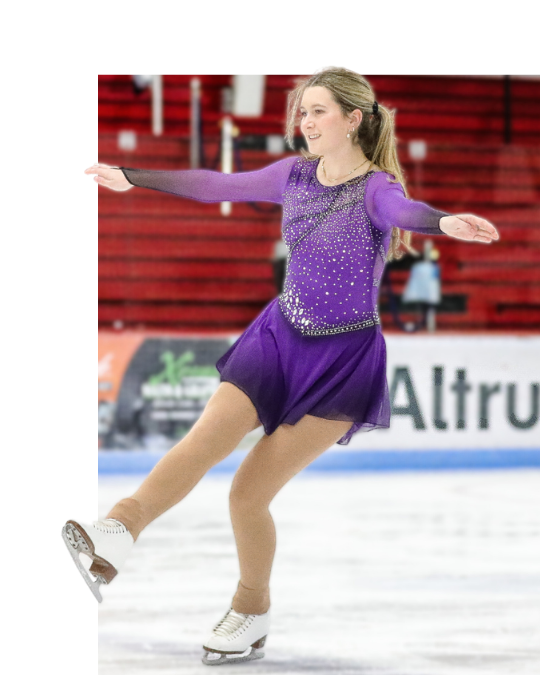
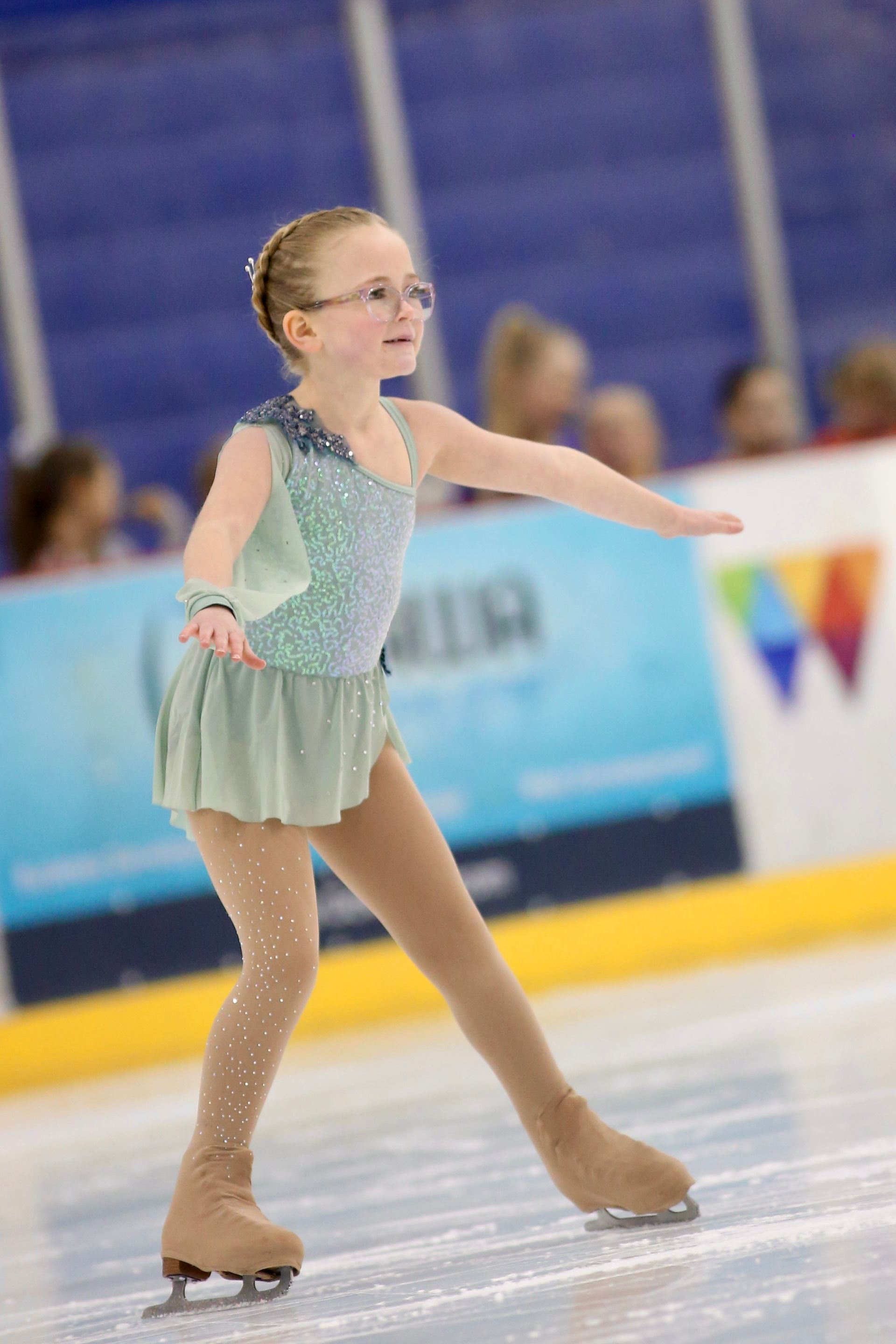
For events such as freeskate/singles, program-with-music, elements, most skaters wear traditional skating attire: typically a skating dress for girls or a performance shirt and pants combination for boys. Skaters usually pair this with beige tights (if applicable) and clean, polished skates. The outfit should be comfortable, allow full movement, and complement the performance and music without being distracting.
For events such as Showcase, attire is often more of a costume. The outfit should connect to and reflect the character, theme, or emotion the skater is portraying in the performance.
Skaters also wear our program jacket at competitions. It is perfect for practice ice, keeps skaters warm around the rink, and proudly represents their home program.
Best advice: consult your coach on what to wear for each event. They will have recommendations based on the event type, program style, and what will help your skater feel confident and prepared!
For our Williston program, we choose the competitions our program will attend as a group based on the overall season schedule and what best supports our skaters and families. When selecting events, we consider factors such as avoiding back-to-back competition weekends, minimizing conflicts with other important events, allowing adequate preparation time, and reasonable travel distance.
While there are many competitions available throughout the season, attending an event individually can be a different experience than attending with your teammates, coaches, and fellow program families. Both options are perfectly fine, but we strongly value camaraderie, community, and team support. We believe those shared experiences are an important and special part of the competitive journey.
Group attendance can also be more practical for families. When coaches attend events with multiple skaters, coaching fees and travel-related costs can often be shared among participating families rather than covered entirely by one family. Our coaching team may also choose to attend additional competitions when schedules allow.
Yes, your skater may attend other competitions individually, even if they are not part of Oka’s planned program schedule. However, it is best practice to consult your competition coach first so training, lesson plans, and preparation remain aligned with the event timeline and goals.
If this is something your family is considering, the first step is to speak with your coaching team so expectations are clear on all sides.
At Oka, we follow a primary/secondary coaching structure. Your designated competition coach is the primary coach for that discipline and wears the “decision hat” for competition planning, level selection, choreography, overall program direction, and attending events with the skater when possible.
A skater may also have different primary coaches in other disciplines. For example, a skater may have one primary competition coach and a different primary skating skills coach.
A secondary coach may work with the skater on specific skills and elements, but does not typically make final decisions regarding competition levels, choreography, or the skater’s overall competitive direction.
When each coach has a clear role and communication is strong, a team coaching approach can be very beneficial for the skater.
Competition registration is completed online through the event’s official website. Parents or guardians are responsible for registering their skater.
Our director shares competition announcements, deadlines, and registration details for the events our program plans to attend, with members who are on track to compete. This means the skater and family have already discussed competition plans with their coach and/or director and have decided to compete (the decision is made well before most registrations opens, as U.S. Figure Skating program requirements are posted before the season begins).
When registering, be sure to confirm your skater’s level and events with your coach to ensure the entry is correct. After registration is submitted, the coach and program director receive a confirmation request. A skater must be approved by both the coach and director and be in good standing with the program.
Families are also often able to purchase practice ice during registration, which we highly recommend. Practice ice sessions are usually 10–20 minutes and give skaters time to get comfortable on the ice, prepare for events, and work with their coach before competing.
Competition costs vary based on the host club, location, and number or level of events entered. Typically, families pay an entry fee for each event, along with any optional practice ice fees. Prior to the competition, there may also be costs for music preparation, skate sharpening, and any needed attire or accessories such as costumes, tights, guards, or extra laces.
Coaching fees may include shared expenses such as mileage, lodging, and meals, along with per-event coaching fees and practice ice support while on site. Your coach can provide a detailed breakdown of any applicable coaching costs.
At Oka, we do our best to communicate these expected costs to families ahead of time so you can plan and be prepared.
Many schools may consider a competition an excused absence if proper documentation is provided. However, school attendance policies vary, so it is important to check with your school in advance so there are no surprises.
U.S. Figure Skating offers a school absence request process for members. Families can complete the required form to request an official school absence letter to share with their school.
Be sure to allow enough time for processing and communicate with your school early if travel will be required.
Yes. Our Williston program currently offers competitive skaters the opportunity to perform one of their competition programs at our annual Showcase event at the end of the main season. This gives skaters another chance to perform, celebrate their hard work, and share their progress with family, friends, and the community.
Competitive skaters also often build strong friendships and meaningful connections through the extra time spent together at the rink, practices, and events throughout the season. Those shared experiences can create a special sense of camaraderie and support.
That said, being a competitive skater is absolutely not the only way to feel connected or successful within our program. Many wonderful skaters choose not to compete and still enjoy friendships, growth, performances, and a fantastic skating experience with Oka.
LEVELS/EVENTS
U.S. Figure Skating offers a wide variety of events and levels for skaters to gain competition experience. While the options are extensive, not every competition includes every event—for example, pair skating is not offered at the competitions we typically attend. Below, you’ll find the events most commonly available at the competitions our members attend. For the most accurate and up-to-date list, always refer to the official competition announcement.
This is not intended to be your only resource—just a starting point. Our skaters sometimes compete in other events, such as Dance, but these are not offered at every competition our organization attends.
Competition levels/events are subject to change based on U.S. Figure Skating rules.
Compete USA
Compete USA Events are where majority of our skaters begin their competitive journey.
Program with Music
(for levels Snowplow Sam through Basic 6)
Aspire Freeskate
(for levels Pre-Freeskate through Freeskate 6)
Elements
(for levels Snowplow Sam through Basic 6)
Compulsory Moves
(for levels Pre-Freeskate through Freeskate 6)
SINGLES
Events listed below are typically events our higher leveled skaters compete in:
Excel Freeskate
(Excel Pre-Preliminary through Excel Senior)
Championship Track Singles,
Well-Balanced Free Skate
(Pre-Preliminary through Senior)
(uses IJS)
SHOWCASE
Showcase events are offered for all levels.
The showcase event is a performance-based competition where skaters use music, costume, and expression to tell a story or portray a character, with judging focused on creativity and presentation rather than technical difficulty.
ALL ABOUT SKATES
Taking care of your skates is just as important as what you do on the ice. A proper fit, the right lacing, and regular maintenance can make all the difference in a skater’s performance and safety. This guide is designed to help families and athletes understand the essentials — from how to tie skates correctly to caring for blades and knowing when it’s time for a sharpening.
WEARING YOUR FIGURE SKATES
How to Fit Check Your Figure Skates
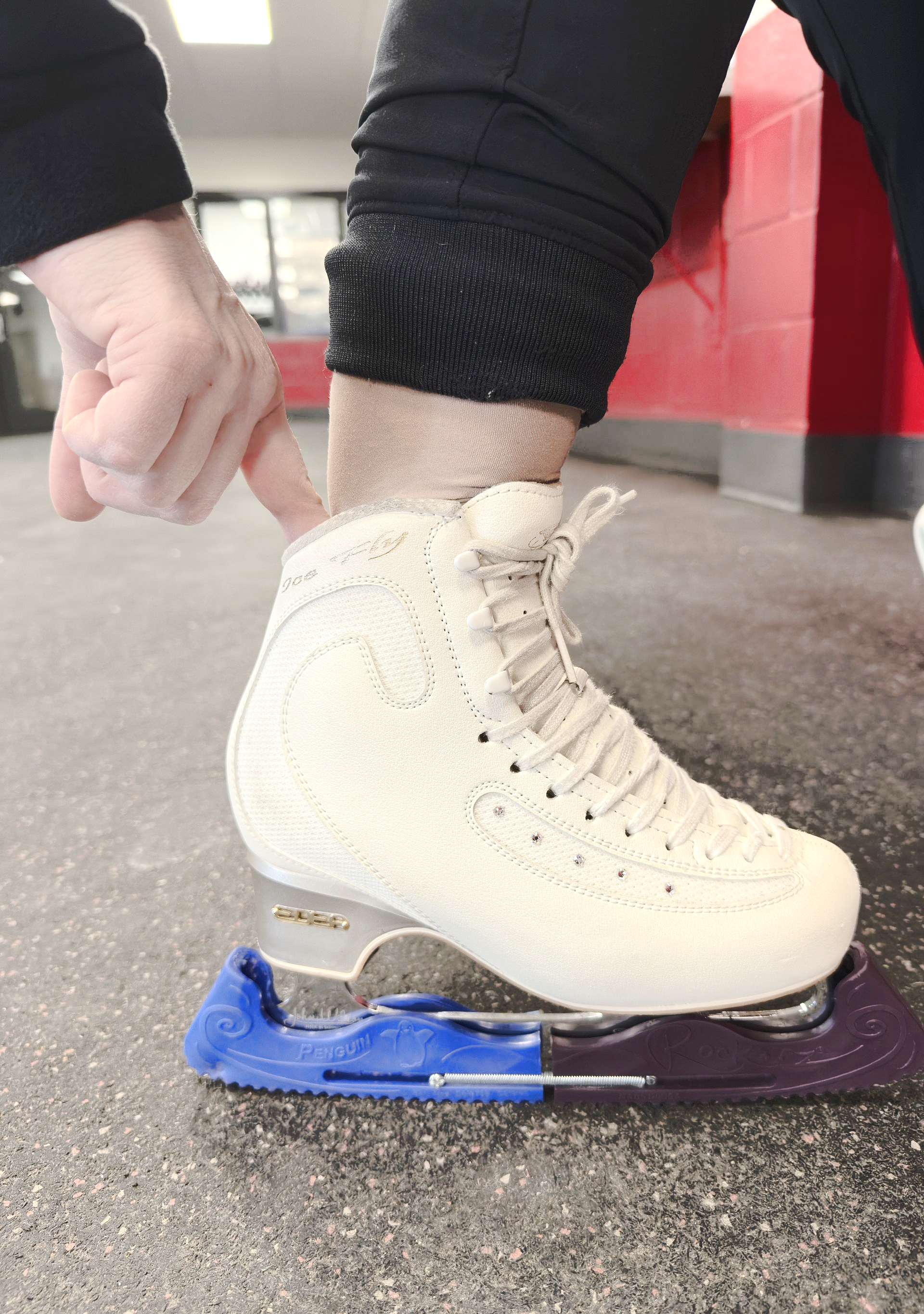
This should be done before tying the skates.
Have the skater push their toes all the way to the front of the boot
Check behind the heel — there should be no more than about a ½ finger of space. This gives you a quick idea if the skate is the correct size.
If there is too much room (more than ½ finger): The skate is too big. This can lead to poor control, lack of support, and difficulty progressing. A smaller size or different boot is recommended.
If there is not enough room (no space or toes feel crammed): The skate is too small. This can cause discomfort, numbness, and limit proper movement. A larger size or different fit is needed.
We always recommend working with a professionally trained skate fitter when purchasing boots. Proper fit is one of the most important pieces of a skater’s development.
- *Once you begin tying, do NOT keep the toes pushed forward—you want the heel pulled back and snug in the skate.
How to Tie Your Figure Skates
Set the heel first
Before tying, have the skater tap their heel back into the boot (you can lightly tap the heel of the skate on the floor). The heel should be fully seated in the heel pocket—this is key for stability.
Start at the toe
Tie snug through the foot, but not cranked tight. Toes should still be able to move a little.
Work up through the middle
As you move up the boot, get a bit tighter through the mid-foot. This helps lock the heel in place.
Ankle bend matters
At the top of the boot, don’t over-tighten. Leave it just slightly looser so the skater can bend forward through the ankle (not inward).
Hooks (top of the skate)
Wrap the laces up and around each hook (not straight across). Give a small pull at each hook so the tension stays even all the way up.
Finish at the top
Tie securely. The skate should feel supportive, but not stiff or restricting.
Different brands may have specific tying methods
Some brands (such as Edea) recommend their own way of tying the boot. Be sure to follow brand-specific guidelines, as each boot is designed differently.
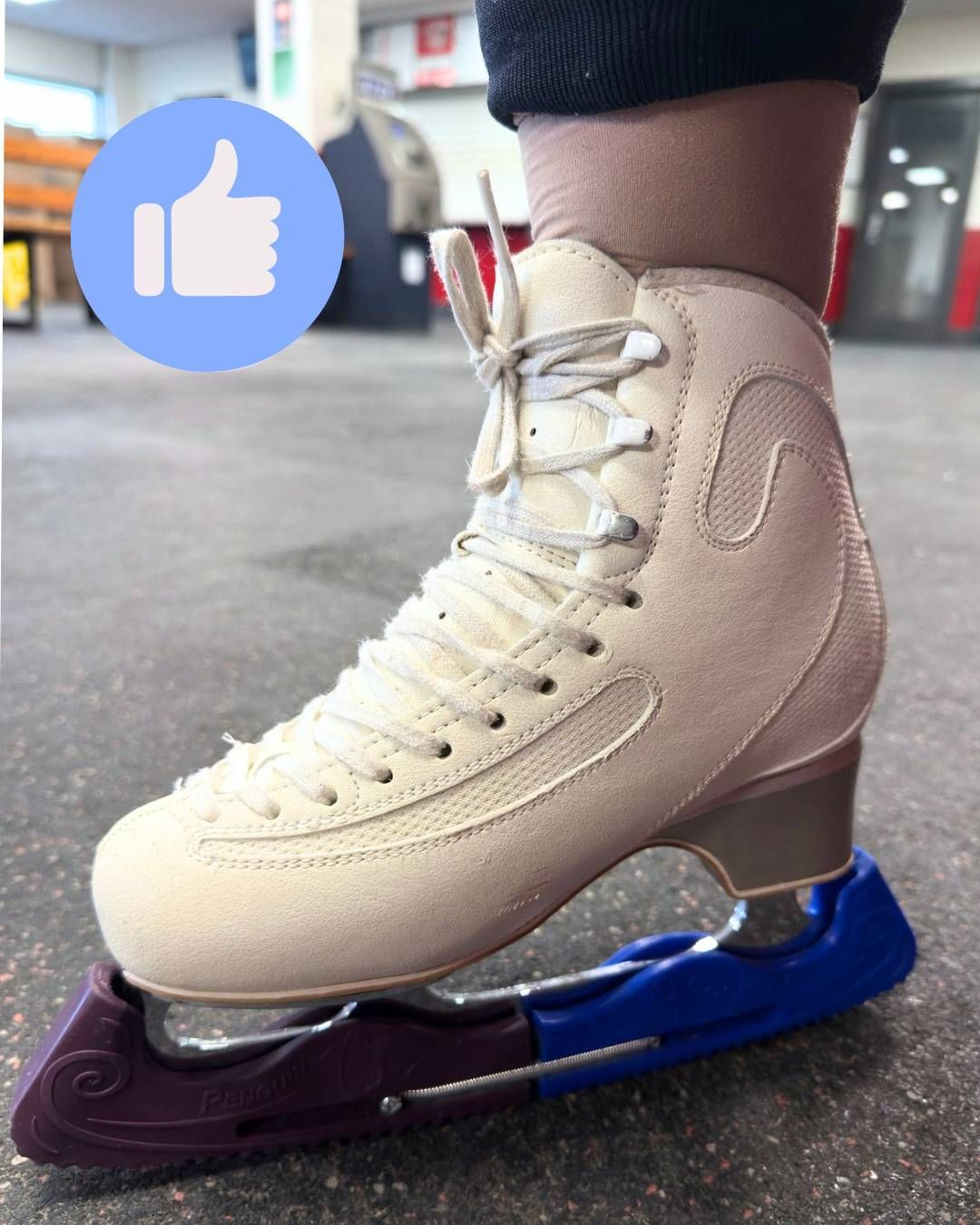
You need to hide your laces. There should not be long loops hanging. tiny loops, wrap around hooks again if needed to use up extra lace, or consider taping the laces down with skate tap. Loose laces are a tripping hazard.
This information is a general guideline. For best results, we recommend working with a certified skate technician who can ensure proper fit and lacing for your specific skates.
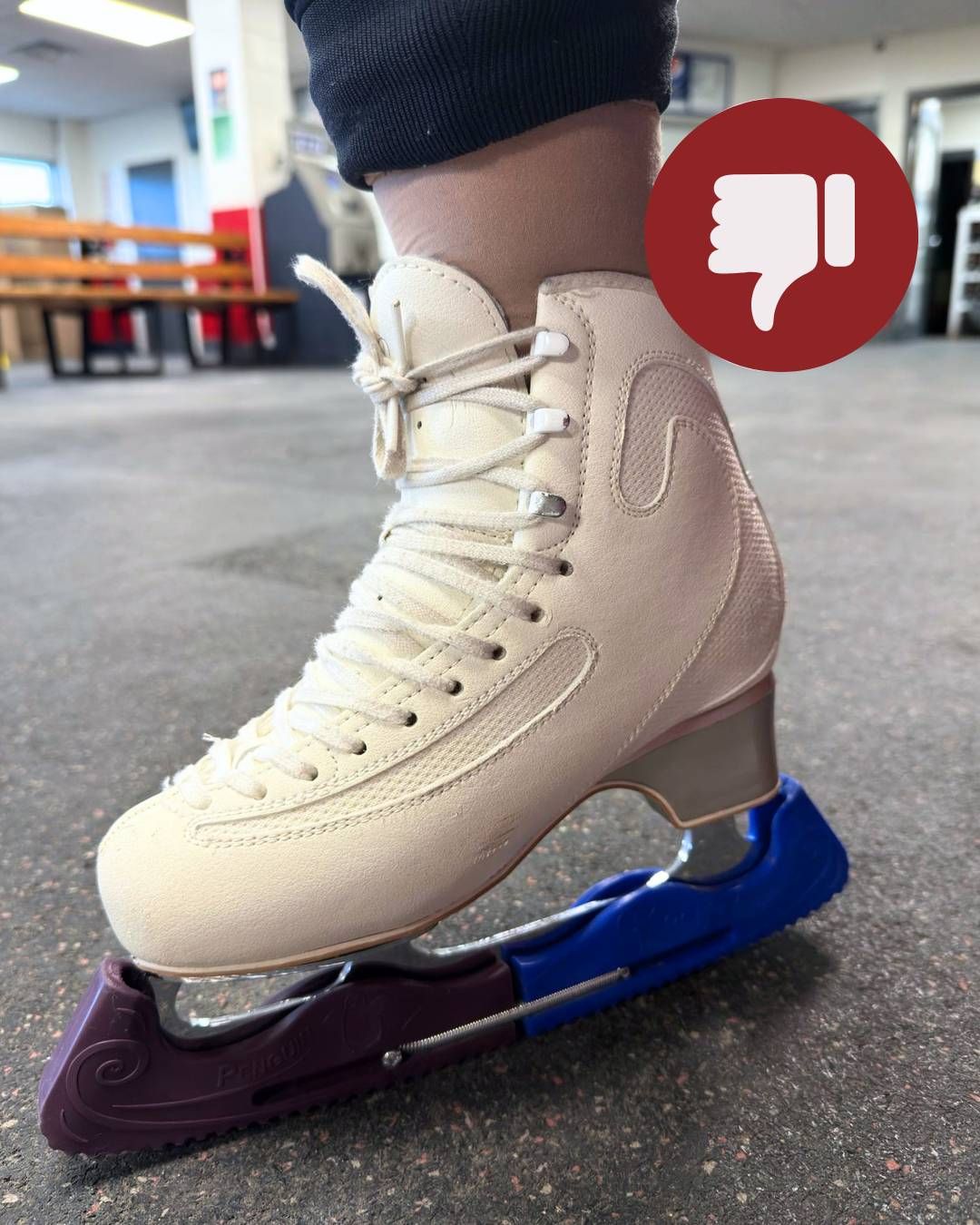
Socks to Wear in Your Figure Skates
Thin is best.
We do not recommend thick socks. Thick socks take away feel in the skate, create extra movement, and can lead to rubbing or poor fit.
Skaters should wear a very thin sock—such as a nylon, skating tight, or thin performance sock. This allows for better connection to the boot and more control on the ice.
The goal is to feel the skate, not cushion it.
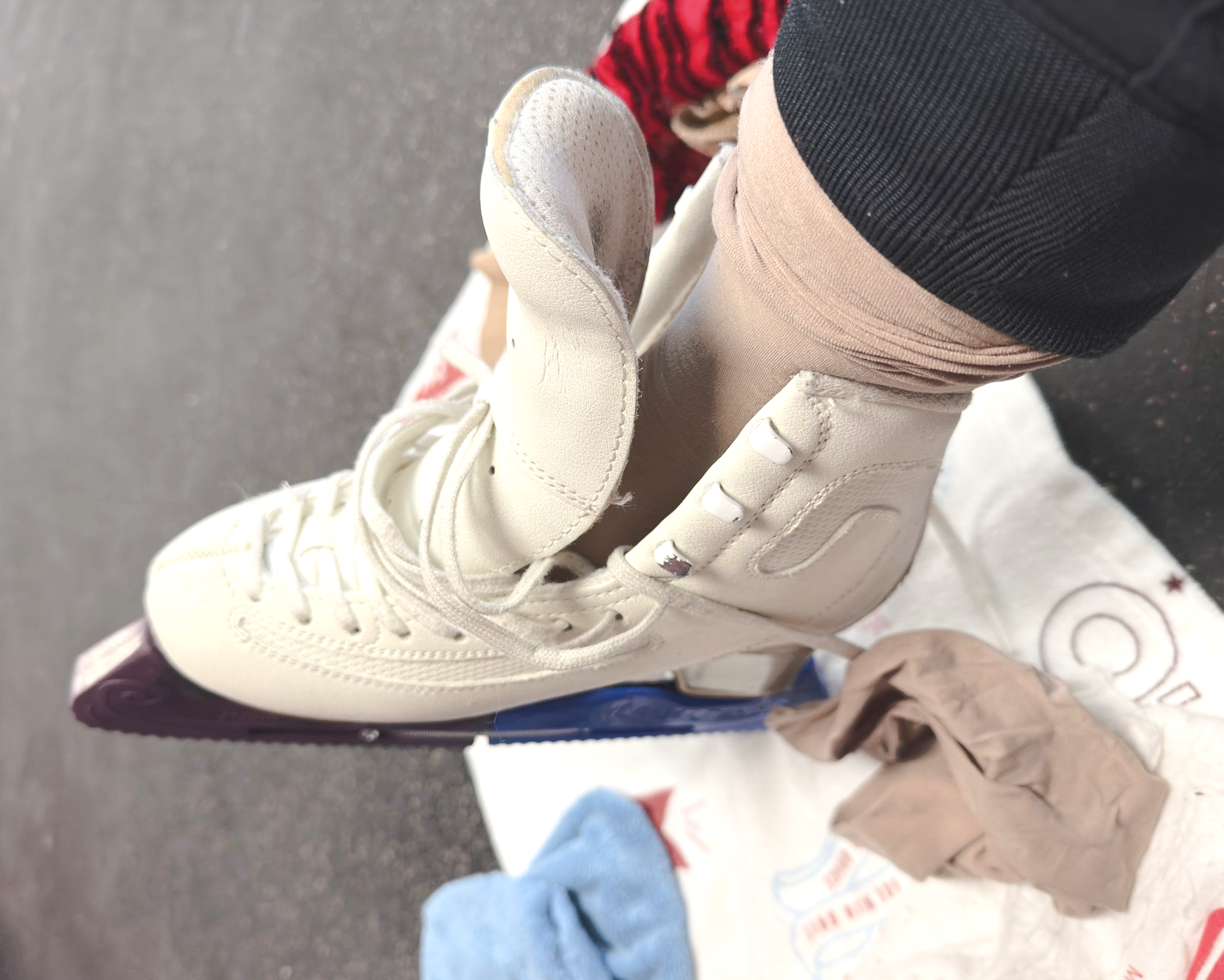
TAKING CARE OF YOUR FIGURE SKATES
After use and Storage:
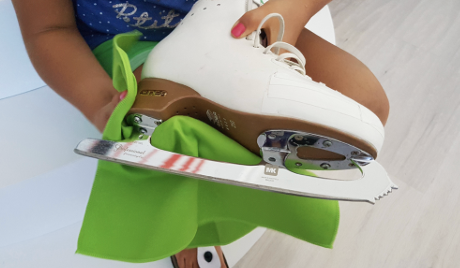
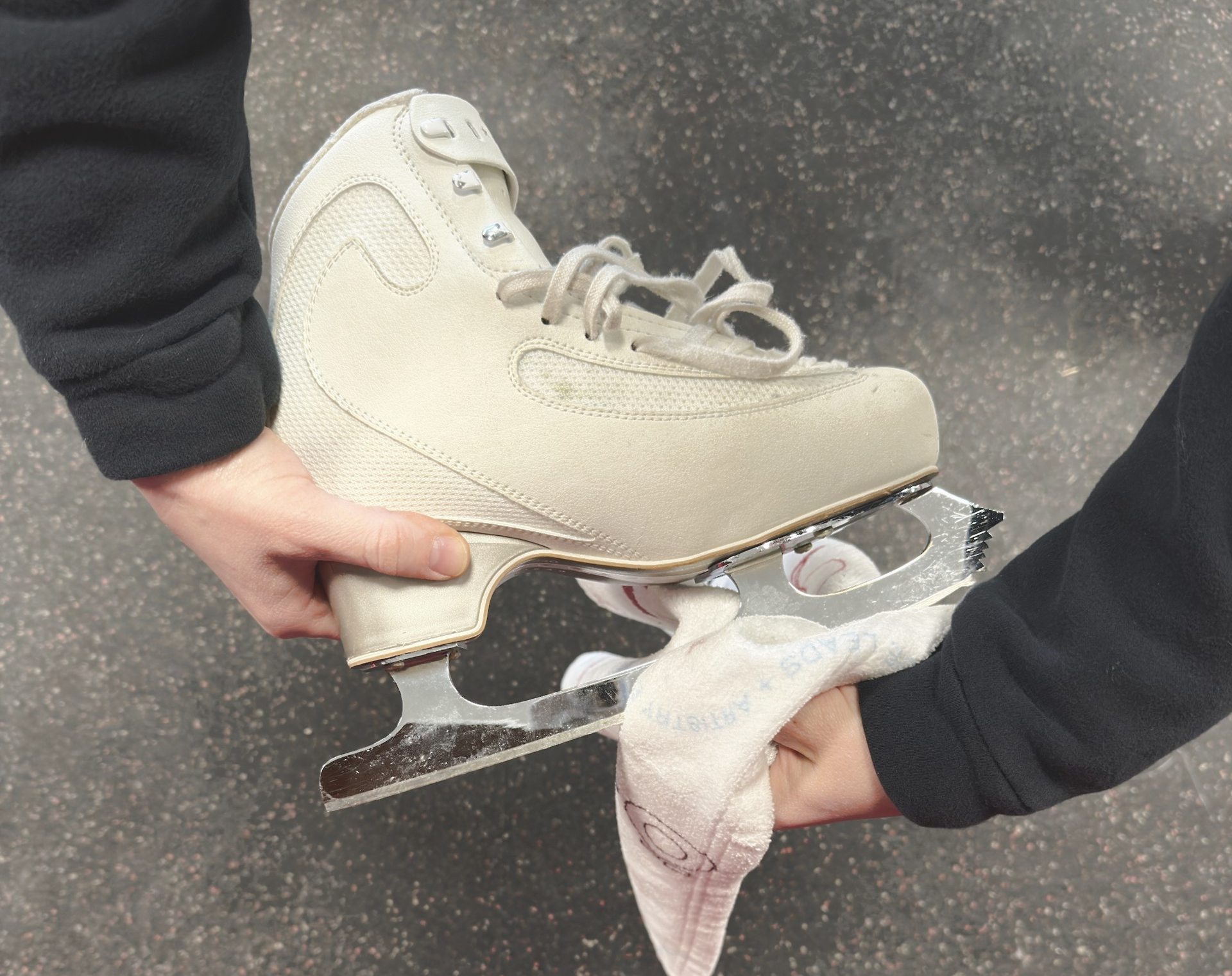
Wipe off snow and moisture with a towel after skating.
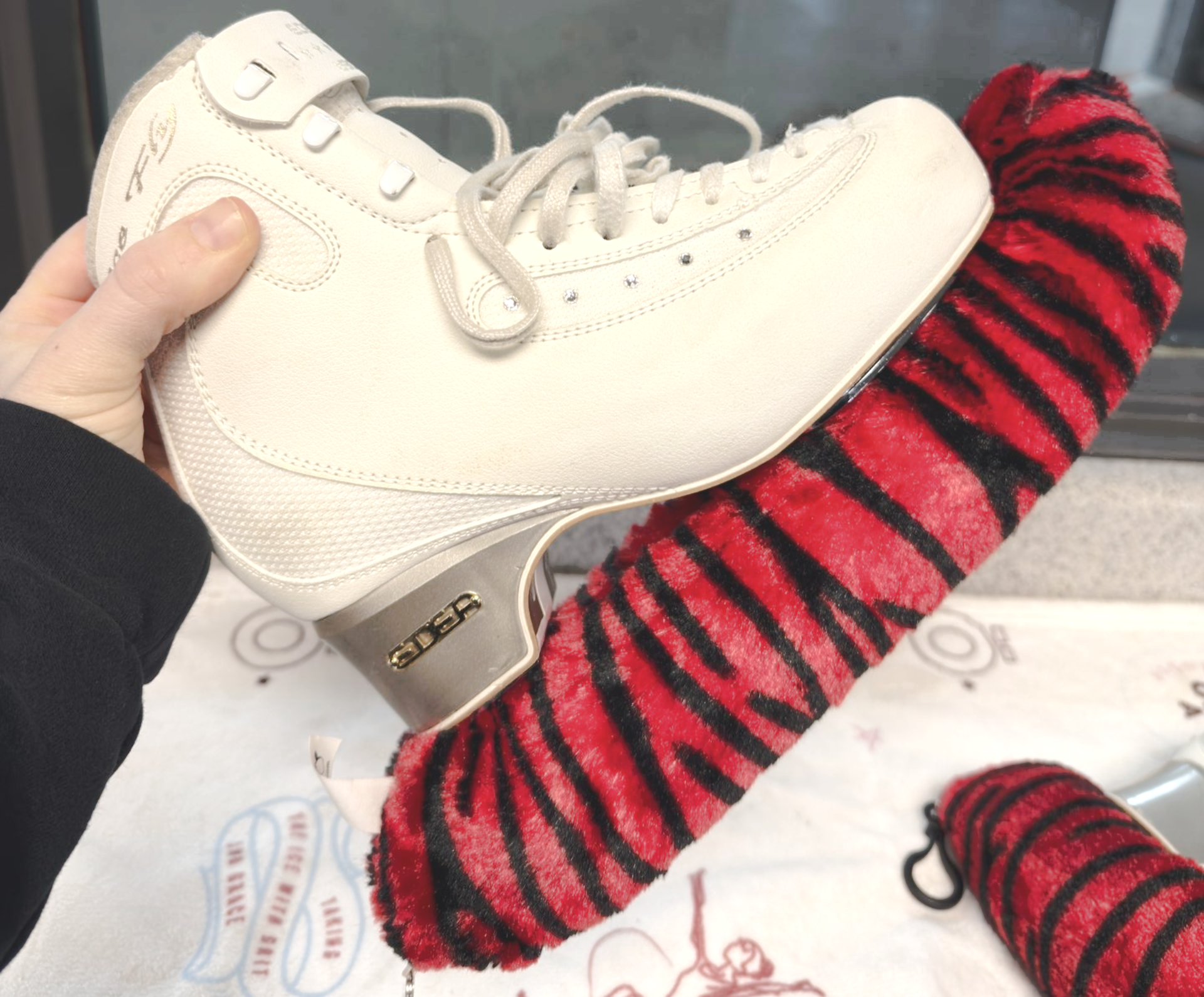
Store Skates with soakers or wrap blades in a towel.
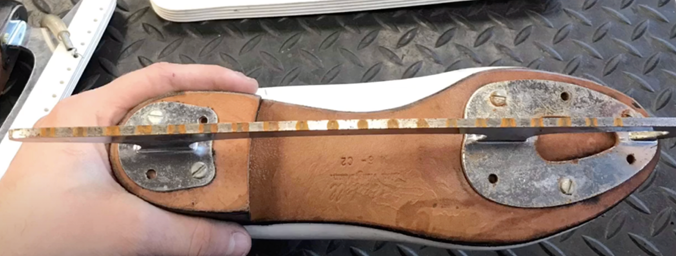
Never store skates with hard guards on - this can lead to rust and ruin the blade.
How to Care for and Store Your Figure Skates After Use
Wipe off snow and moisture with a towel after skating.
Use soakers (soft guards) after drying to help absorb remaining moisture.
Take skates out of your bag when you get home and allow them to air dry. This helps dry not only the blades, but also the inside of the boot—especially if the skater sweats.
Note: Never store skates with hard guards on—this can trap moisture, lead to rust, and ruin the blade.
Where NOT to Store Your Figure Skates
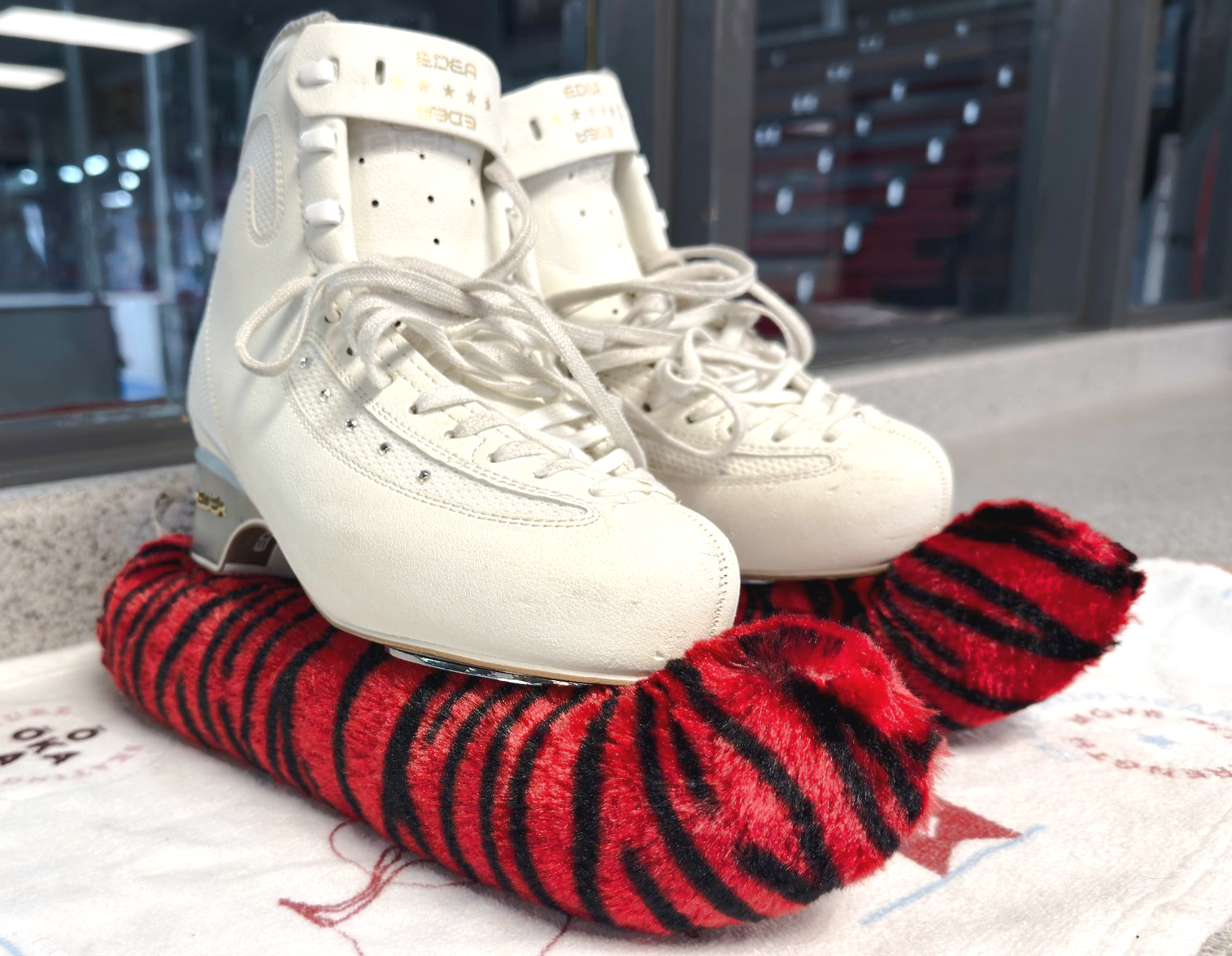
Avoid leaving skates in places with extreme temperatures or moisture.
Do not leave skates in the car (especially in winter or summer) — extreme cold and heat can damage the boot and break down materials
Avoid damp areas like garages, basements, or near entryways where snow and moisture build up
Do not leave skates in a closed bag long-term — this traps moisture and can lead to rust and breakdown inside the boot
Store skates in a dry, room-temperature environment whenever possible.
Walking With Figure Skates On
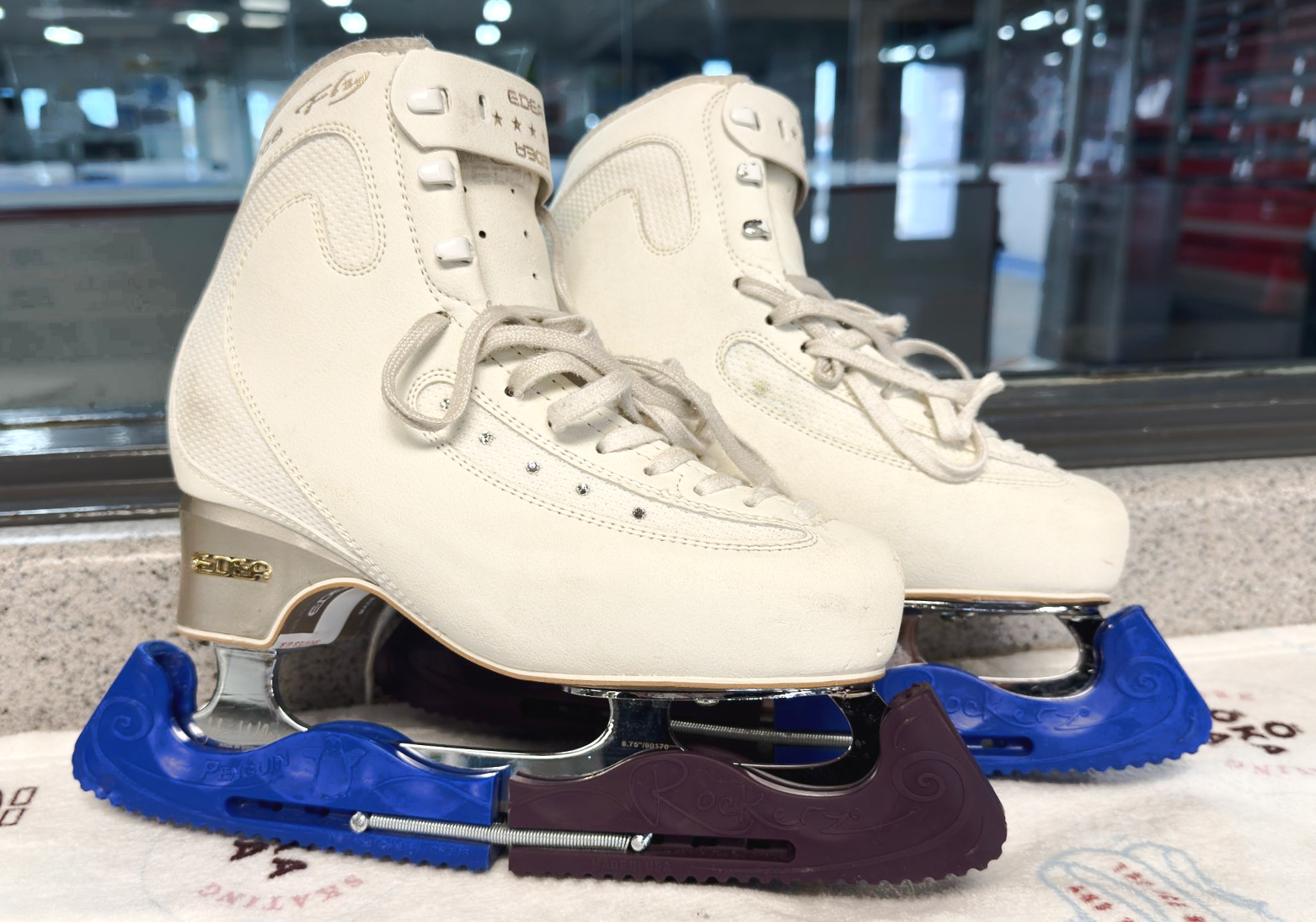
- Always wear hard guards when walking, even on rubber matting.
- Small rocks, dirt, or debris on the floor can dull blades, cause nicks, and shorten blade life.
- Wearing hard guards helps protect your blades and maintain sharpening longer.
When to Sharpen Figure Skate Blades
General rule
- Skates typically need sharpening about every 20 hours of skating. This can vary based on the skater and how often they’re on the ice.
What to watch for
- Blades feel “slippy” or less controlled on the ice
- Trouble holding edges or stopping
- Turns and spins feel inconsistent
- Visible nicks or damage on the blade
- You can gently run a finger across the blade (side to side, not along the edge) to check for nicks. If you feel any, it’s time for a sharpening.
What impacts blade life
- Walking without guards
- Stepping on debris (even on rubber)
- Frequency and intensity of skating
Important
- We always recommend having your blades sharpened by a certified skate technician who specializes in figure skates. Figure skate sharpening is different from hockey sharpening, and quality can vary depending on who is doing the work. Many skilled skate technicians operate independently rather than out of a retail store—be sure to look into options in your area.
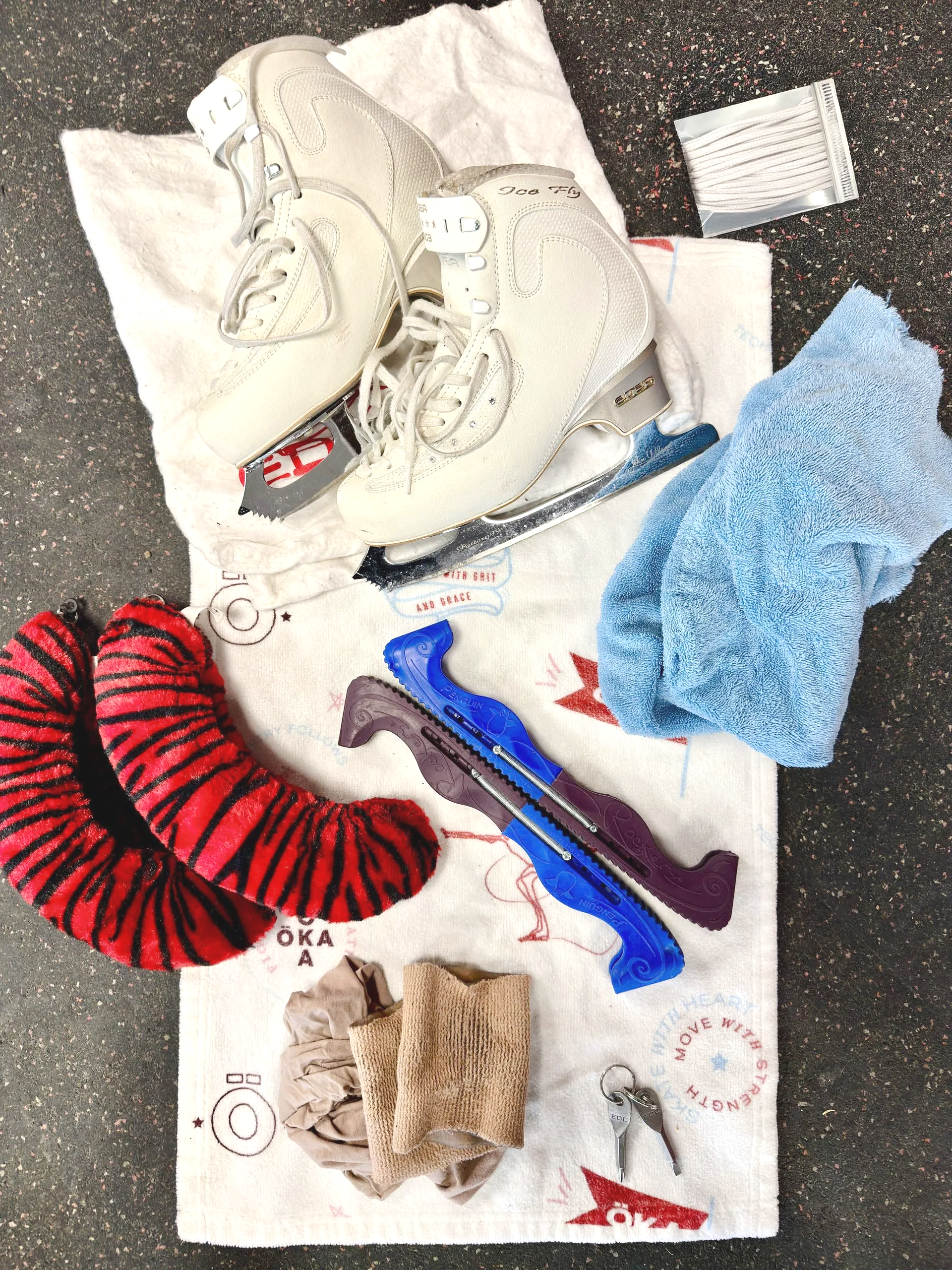
Skate Bag Essentials
A well-packed bag keeps you prepared for whatever the rink throws your way. Here's a breakdown of the essentials every figure skater should have on hand.
- Skates!
- Cloth Boot Bags
(one for each skate to protect them while in your skate bag) - Hard Guards
- Footed Nylon Tights
- Ankle Gel Sleeves
- Screw Driver Set
- Extra Laces
- Drying Towel
Got a question you didn't find the answer to?
Let us know, and we'll do our best to guide you.